For Favignana the “tuff”, like Tuna, it was good economic primary since ancient times.
From the 1700 the extraction of “white stone”, as the rock that was then cut into was called “ashlars” or blocks, for use in construction, it had an increasing development until the 1970s. I “pirriatori” they were the men who worked in these quarries and who left traces of the immense excavation work, largely manual, in the eastern part of the island. Today this extraction is carried out in a few quarries and in any case for exclusively local use, but until the 1970s, Favignana tuff was used in much of Western Sicily. Many ancient quarries are now residences in underground gardens, or gardens of villas and houses set in the rock. An example open to the public is “The Garden of the Impossible“.
A film that can give an idea of the work and social problems of the Favignana quarries, filmed in 2008 directed by Donatella Maiorca, And SEA PURPLE which I recommend watching.
For more details and further information I have published a specific article here: IL “TUFF” OF FAVIGNANA
In this article I want to offer you some walks that do not involve great risks and which can be done throughout the year to allow you to appreciate what is still visible in a few stretches of the western coast of the island.
Means of transportation will be quite a few low trekking shoes or at least a good pair of sneakers with lug soles. A supply of water must not be missing as well as a sandwich for a packed lunch and fruit to recover salts and sugars. Swimsuit and beach towel for swimming breaks from spring to autumn.
We leave for the long walk from the mural dedicated to the Uncle Sarino, quarryman and fisherman from Favignana, who dedicated the final part of his life to sculpting living stone and rocks obtaining small and large anthropomorphic sculptures today in private properties. Uncle Sarino's invitation is to take care of your land and “keep the island clean” as the mural says.
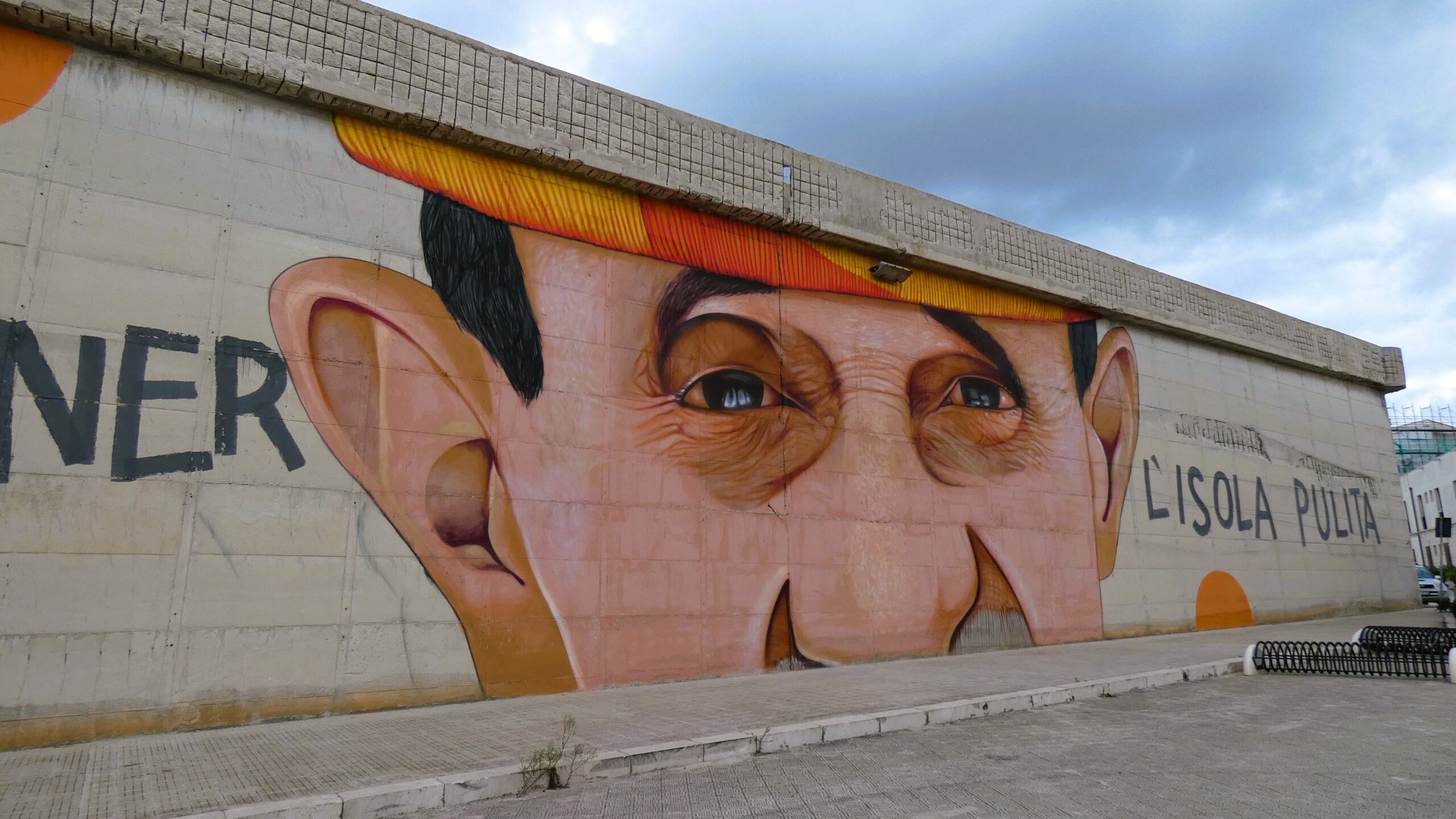
It murals, created by the artist Mirko Cavallotto in 2021, it is located on the north-west side of the reinforced concrete walls that surround the former Bourbon prison of Favignana, Already Castle of San Giacomo, today disused.
Going down the “Camparia” to which I will dedicate a separate article, also built with Favignana stone, we get to Europe Square where you can observe the statue of Ignazio Florio of the 1896.
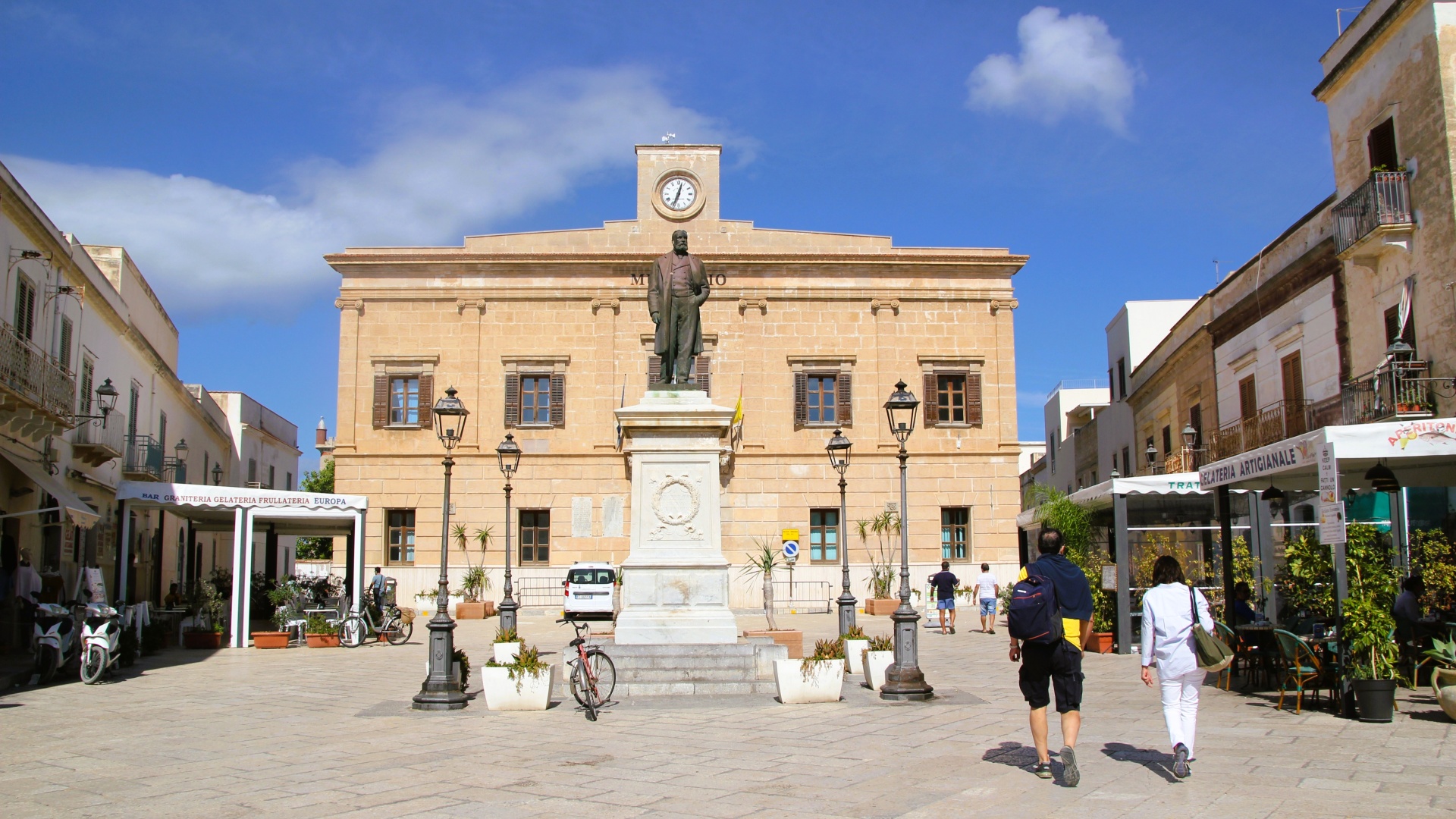
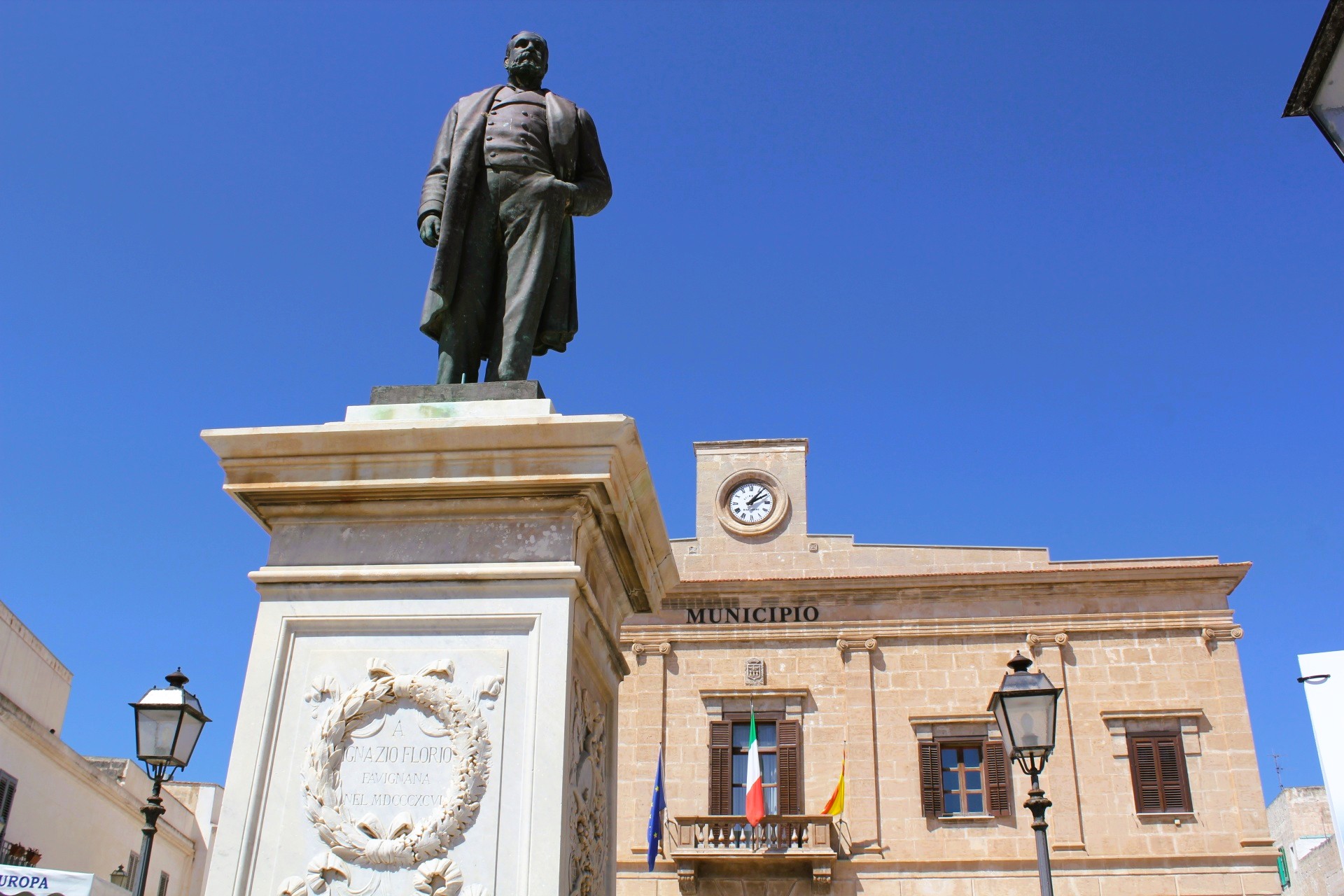
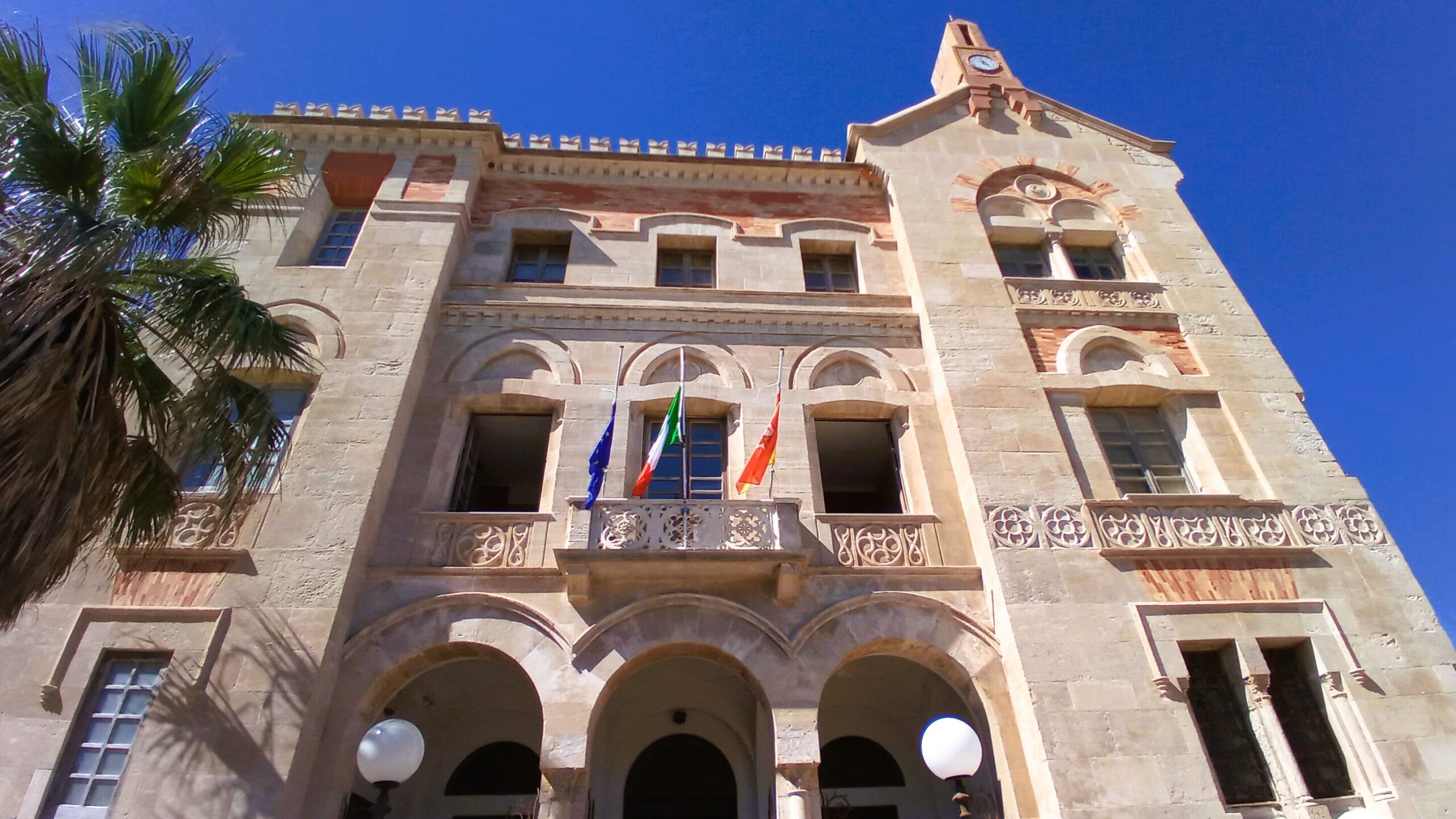
The calcarenite ashlars can be admired in the beautiful façade of the Municipality. We then move towards the marina along Via Florio, we overcome the Villa Florio, built, like much of the country, precisely with the calcarenite of Favignana, improperly called tuff. We take the coastal road or via Duilio, whatever you want to call it.
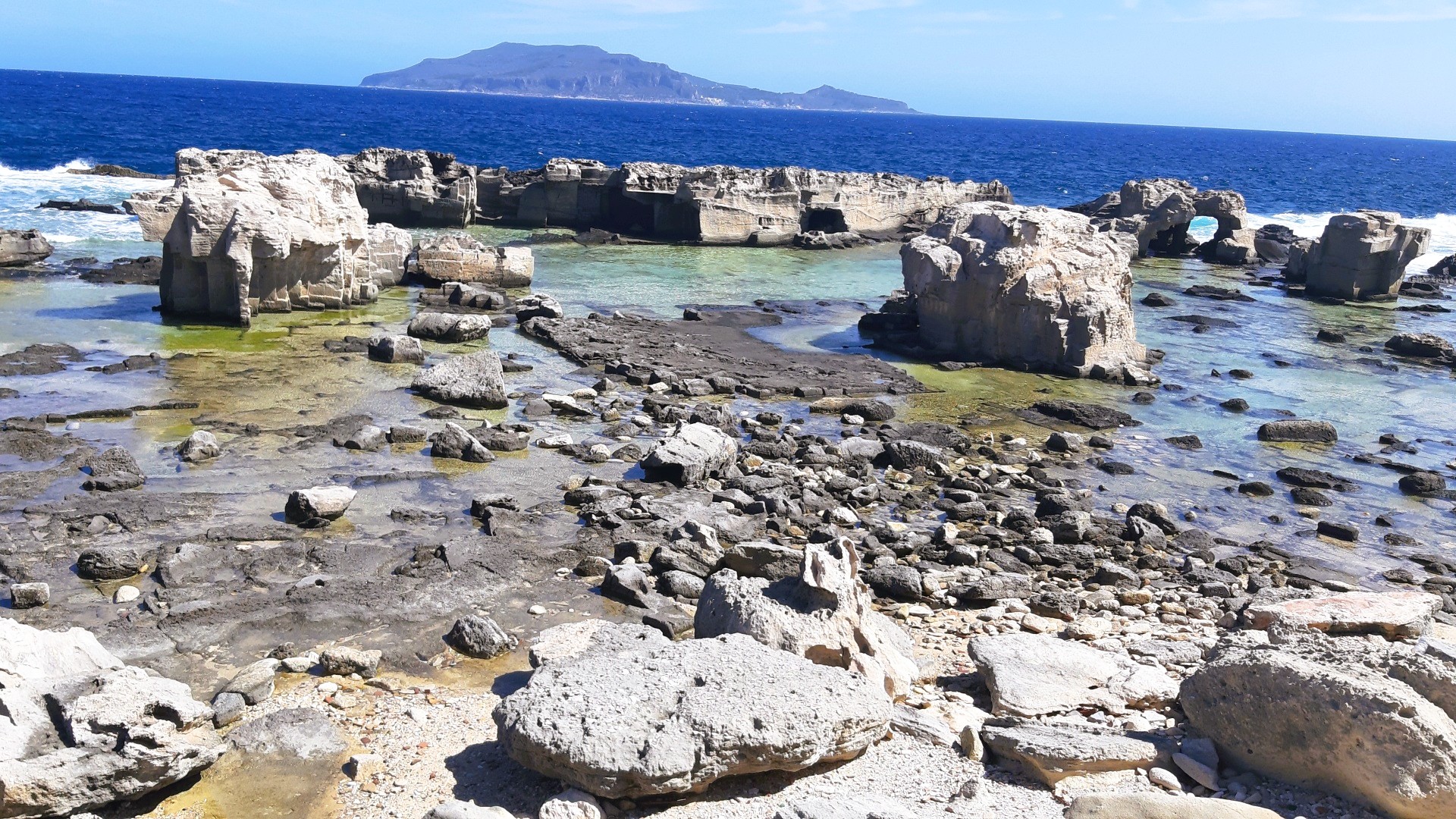
Here we can observe that the coast is “cut into blocks” squared and the sea gave life to swimming pools set in ancient quarries.
This entire north-east coast has been involved in excavations for the extraction of calcarenite, the traces are clearly visible when looking at the coastline that opens towards Levanzo, lying on the horizon.
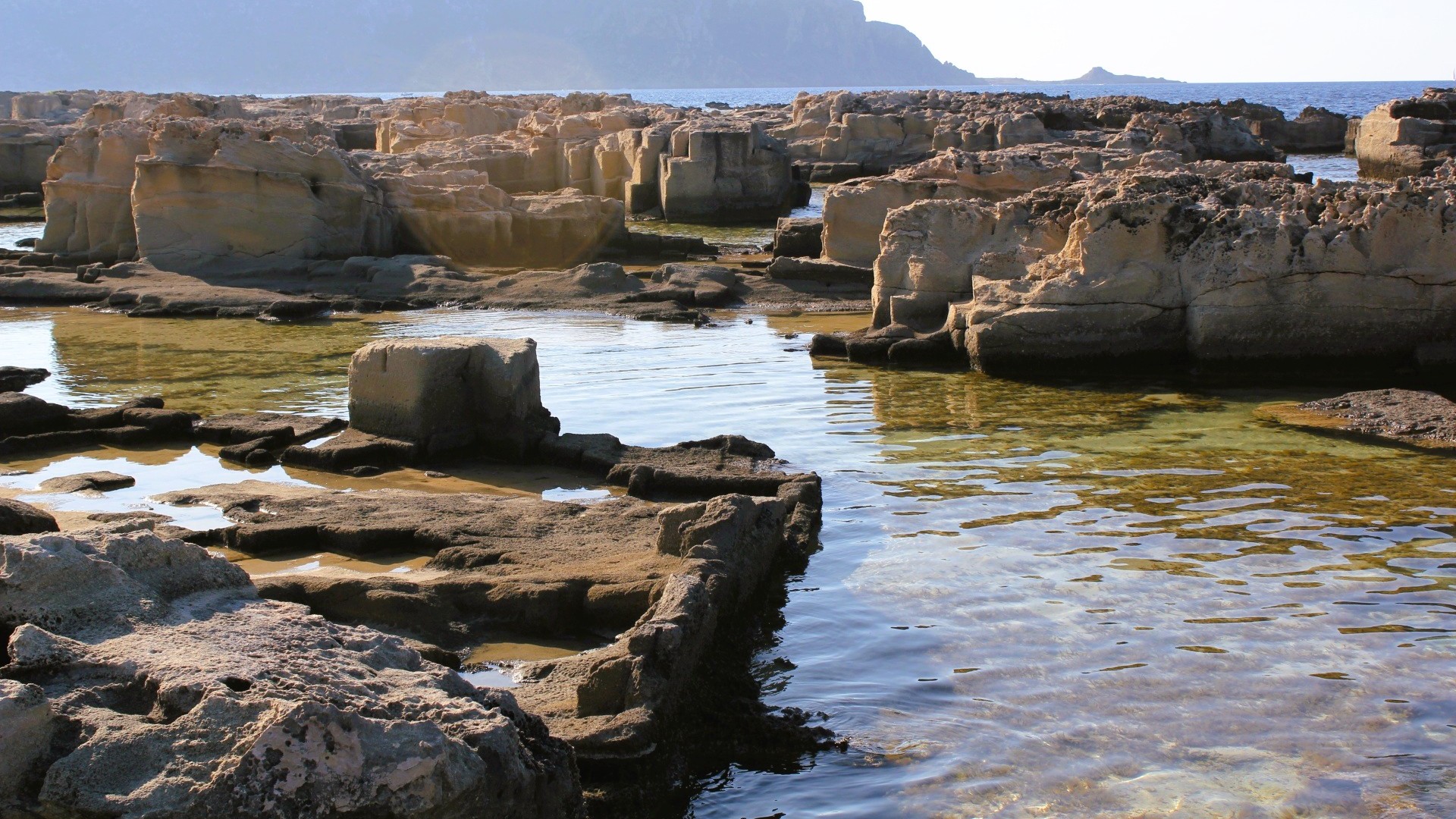
The seafront ends with a bend and at the end there is a dirt road that continues towards the cemetery of San Nicola, the coastal road of Tramontana, we have to go through it all to get there Cala San Nicola, right behind the cemetery.
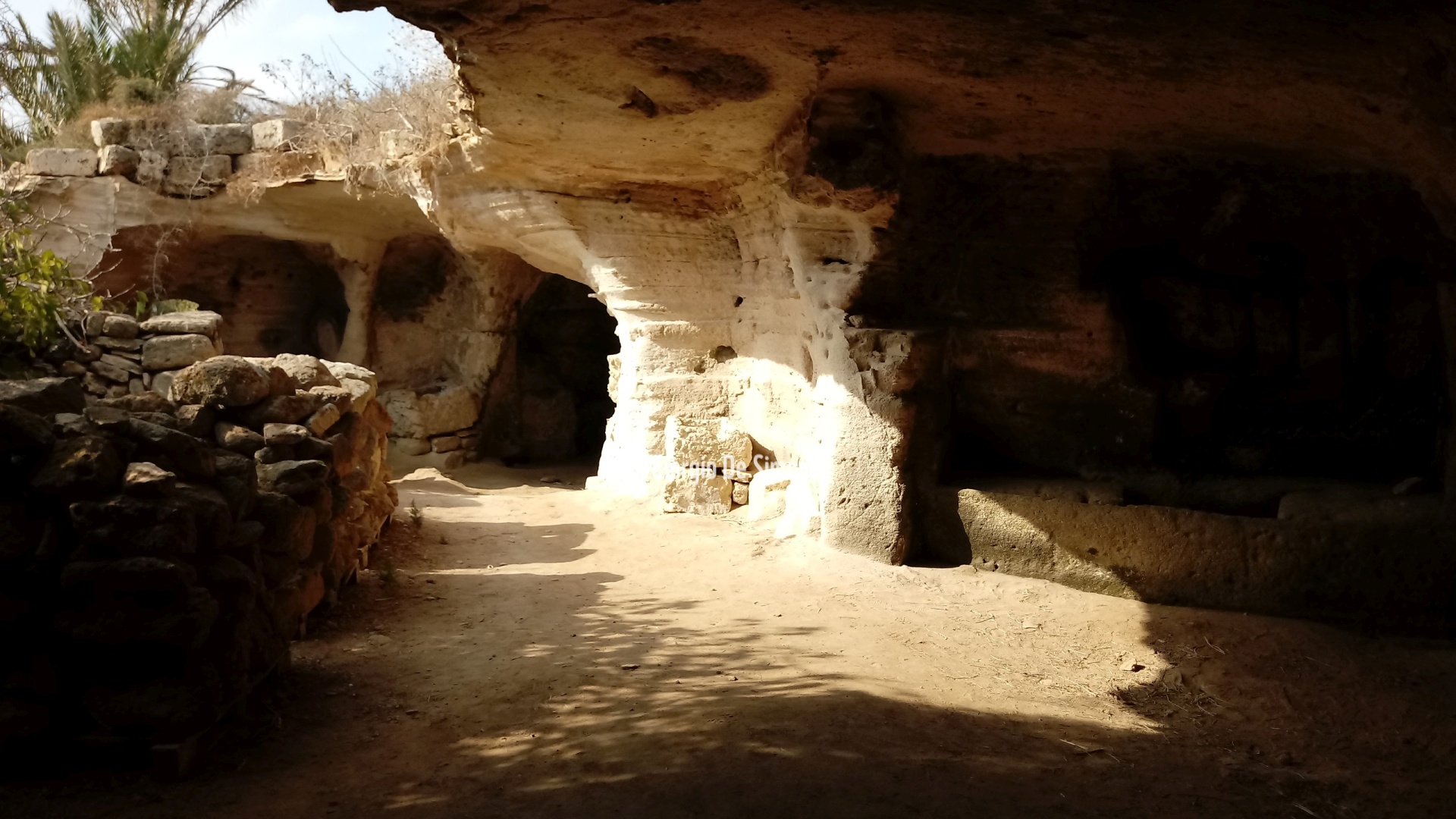
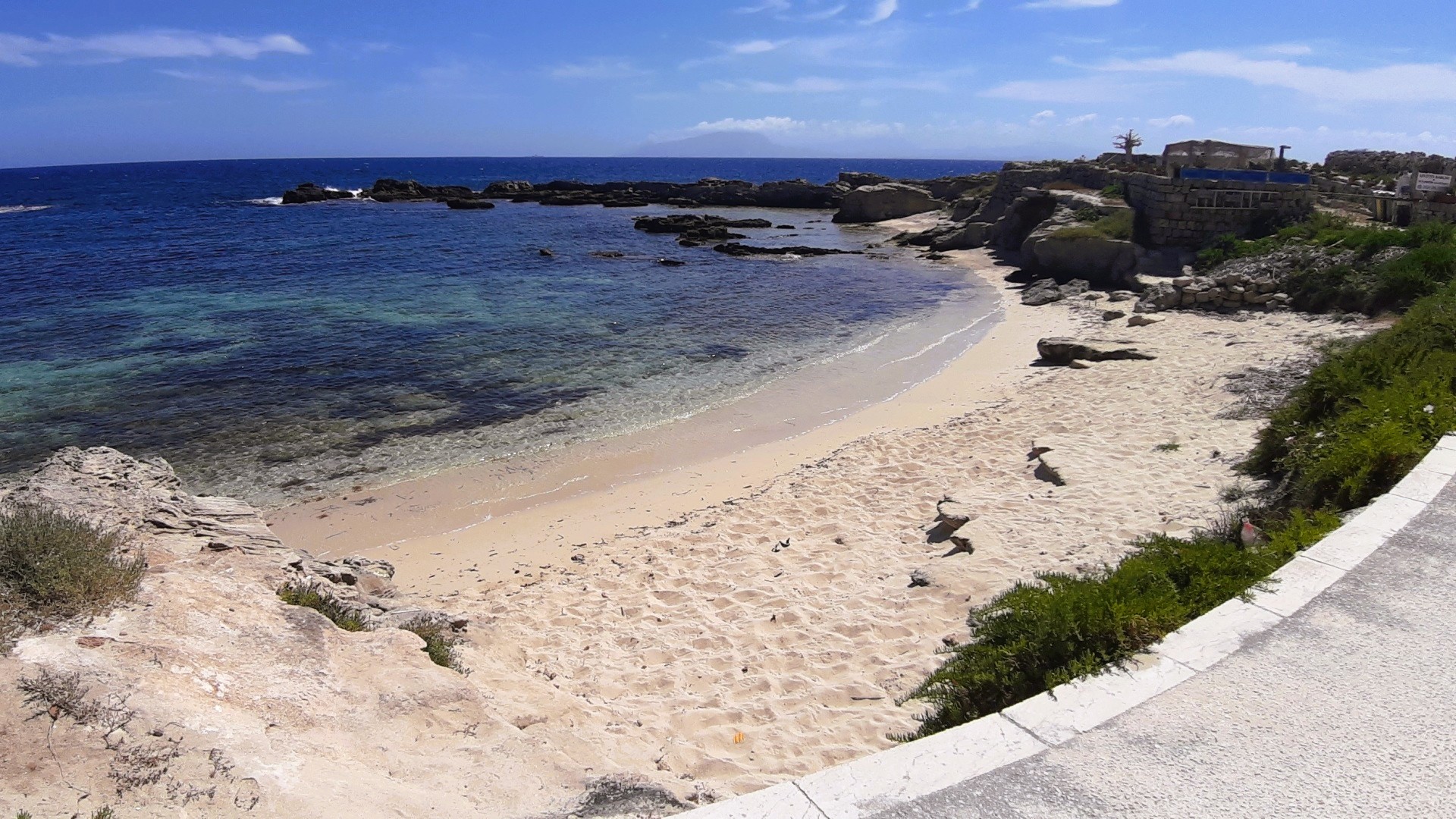 We will encounter the power plant along the way, unfortunately still on gas, that powers the island. Until a few years ago, an important hypogeum was open nearby, the museum site of Grotta del Pozzo.
Cala San Nicola it is one of the few sandy beaches on the island and a swim here is something wonderful, I recommend a mask for snorkeling. Refreshed and toned we can continue the journey which I recommend doing on foot because only by walking can you appreciate colours, sensations, scents and landscapes that would otherwise not be appreciable, not even on a bicycle, so wear a pair of comfortable shoes, preferably low trekking shoes, and you will enjoy unforgettable walks.
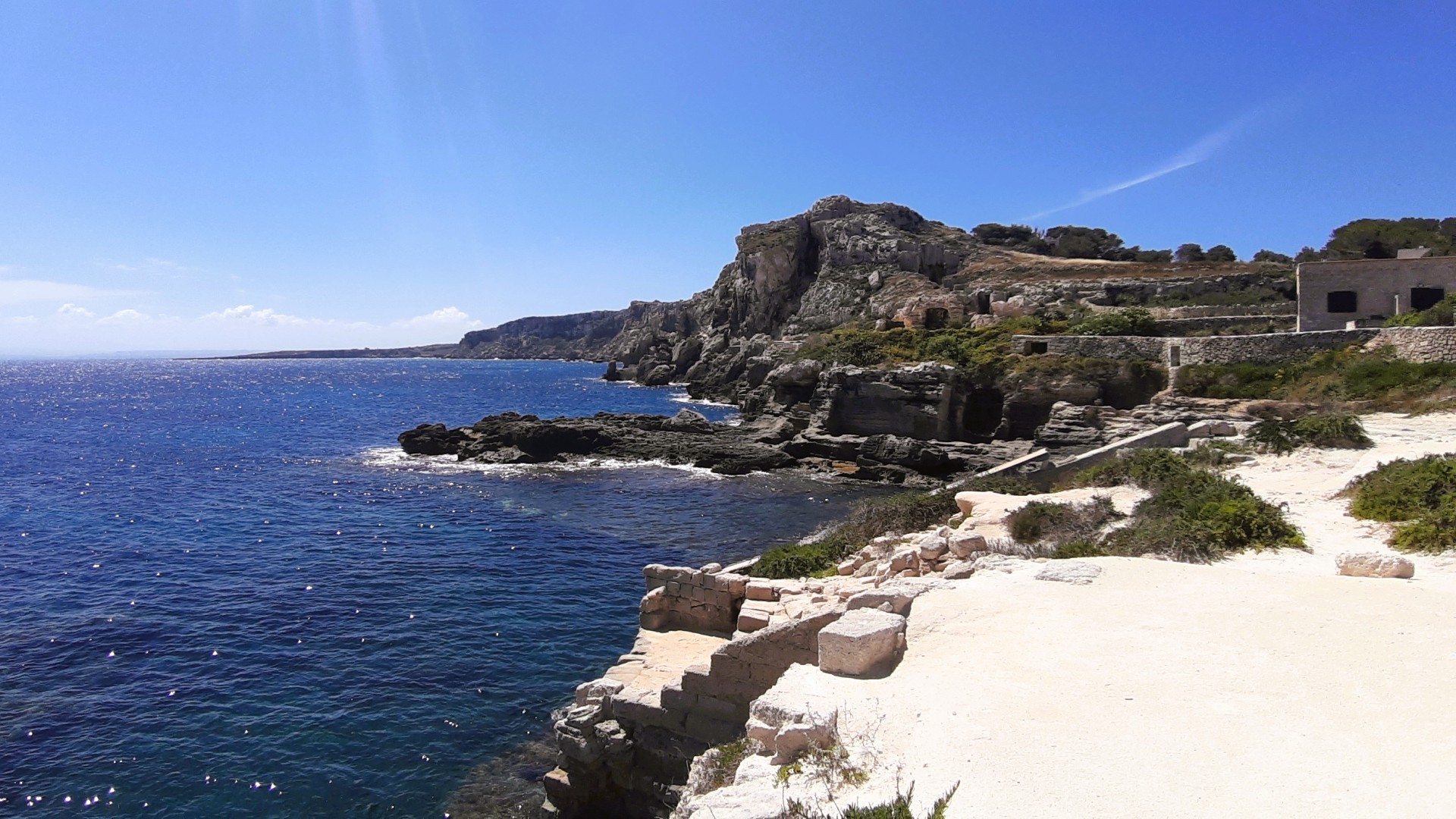
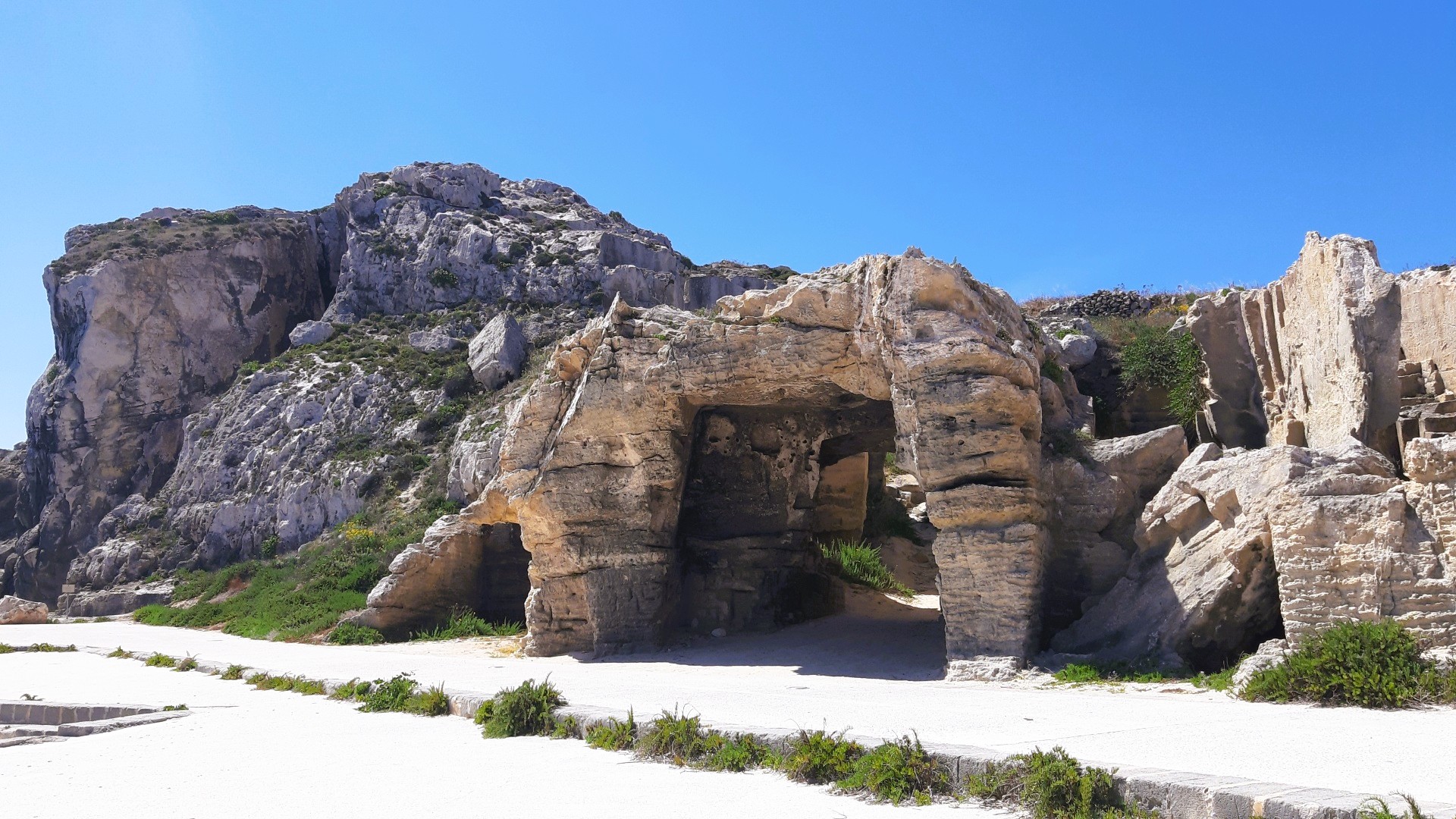
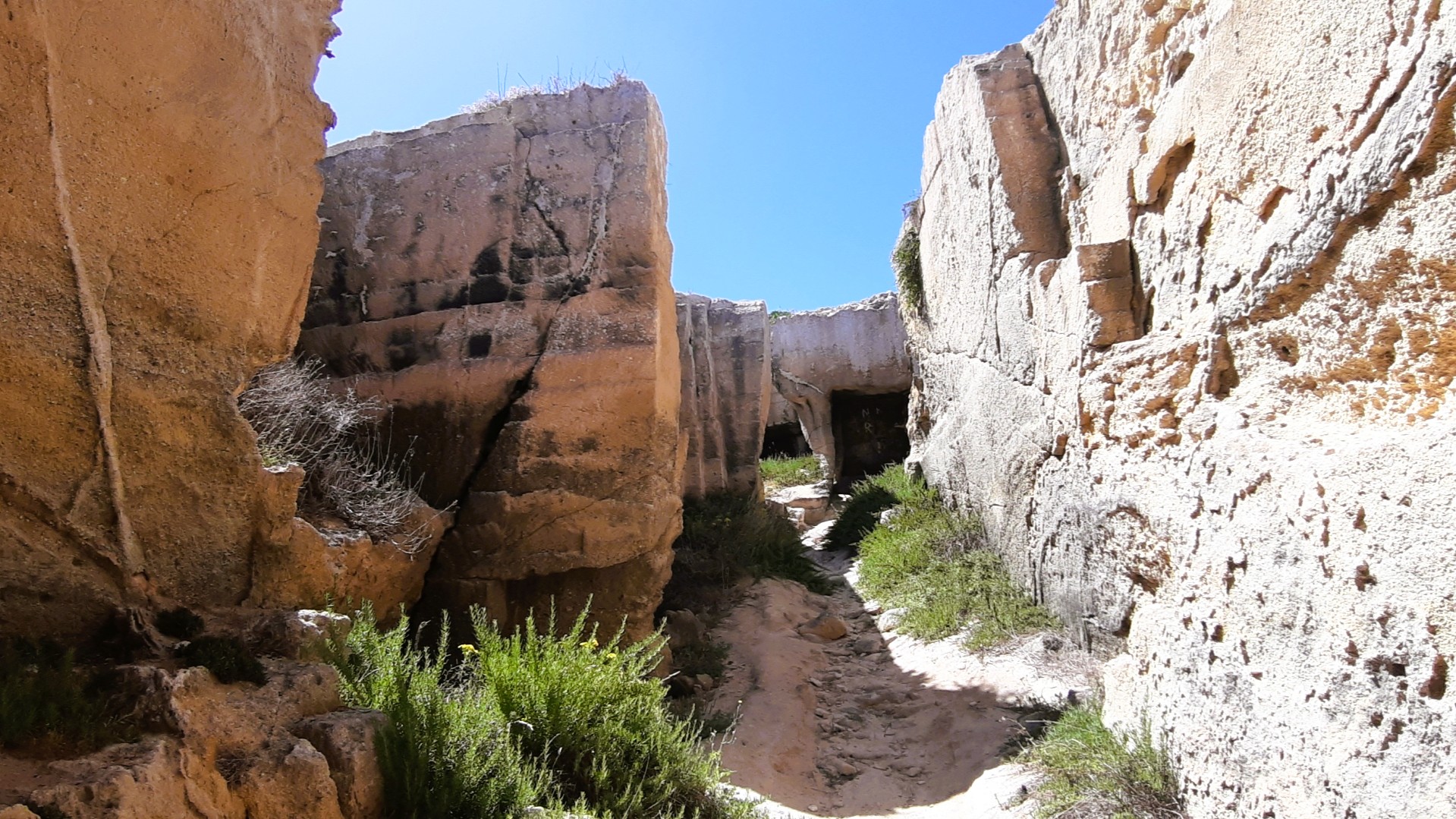
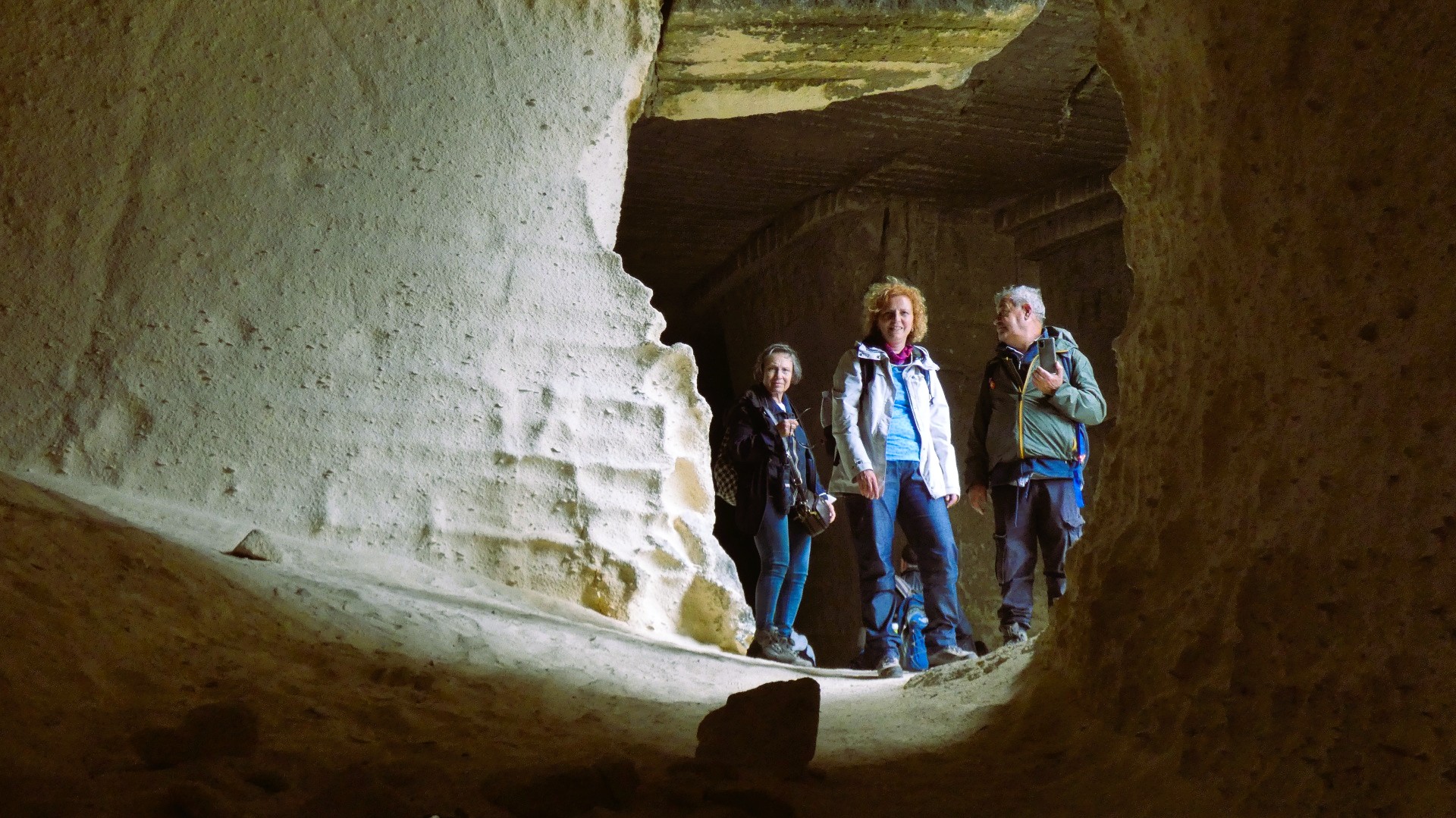
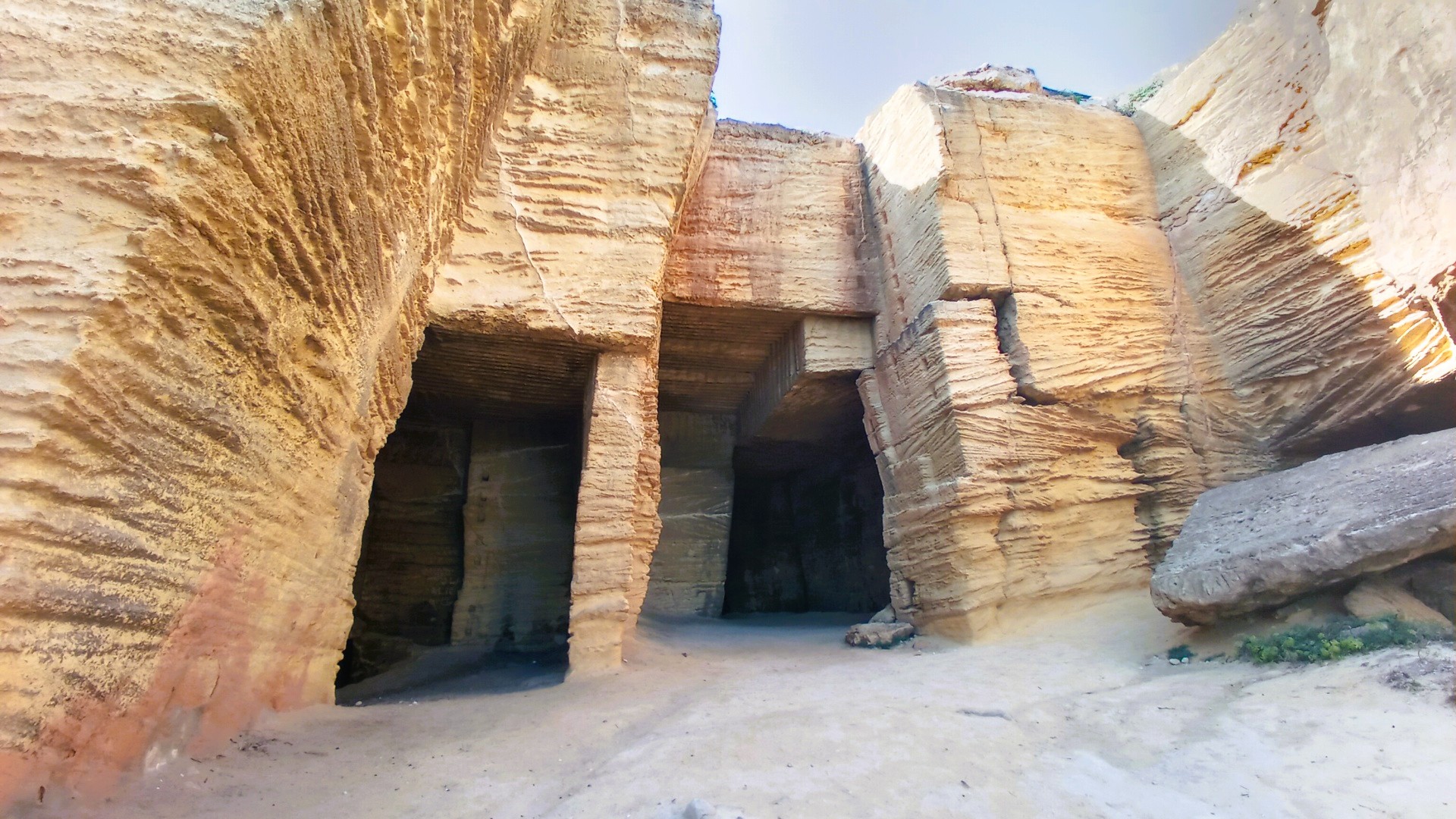
Continuing on the same road which at times becomes paved or cemented we arrive at Scalo Cavallo and to the Cava di Cala Cavallo o Scaru Cavaddu how it is identified by pirriaturi. Here we can visit a first large quarry with slides used for running “ashlars” directly on the boats, the typical ones “you suck” sailing, who brought the precious blocks of calcarenite to Sicily. The cemented pitch tells us that we have arrived but further on at the end we see a vaulted entrance towards the cliff. If we enter with respect and devotion, attention and caution, we will discover a world otherwise impossible to know. Don't get lost here because other places await us. From the start to here we have traveled just over 3 km, for a hiker they are little things.
On leaving we can opt to return to the village via the same path, make an internal ring or continue, after perhaps having done an energy recharge here at the horse stop.
The objective is to reach the cave (always artificial because it is the result of a quarry) of the bue Marino, but first we have to get to Cala Rossa. Let's continue or do it tomorrow ? You do it… I continue.
The directions are clear because cars can arrive here as the roads are paved and comfortable. Let's go up to 500 meters until the crossroads for the town or for Cala Rossa, let's go towards Cala Rossa. We travel at the same altitude level 1 approximately km of asphalt until the end where a dirt road begins which will take us after a few hundred meters up to Cala Rossa. Here I don't recommend going down because we are a little’ tired, maybe we can visit the cove and its quarries on another day that we will dedicate only to this.
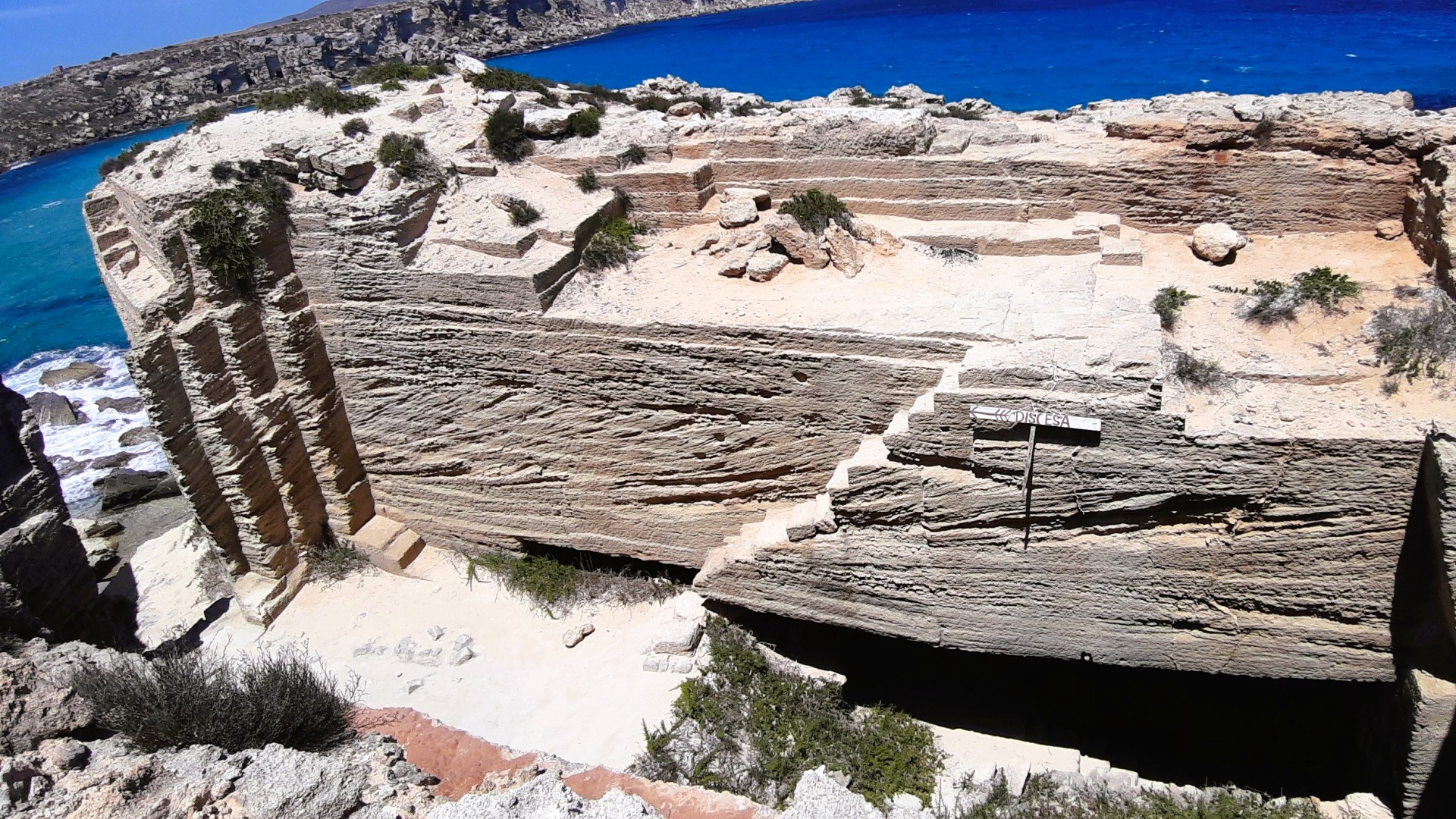
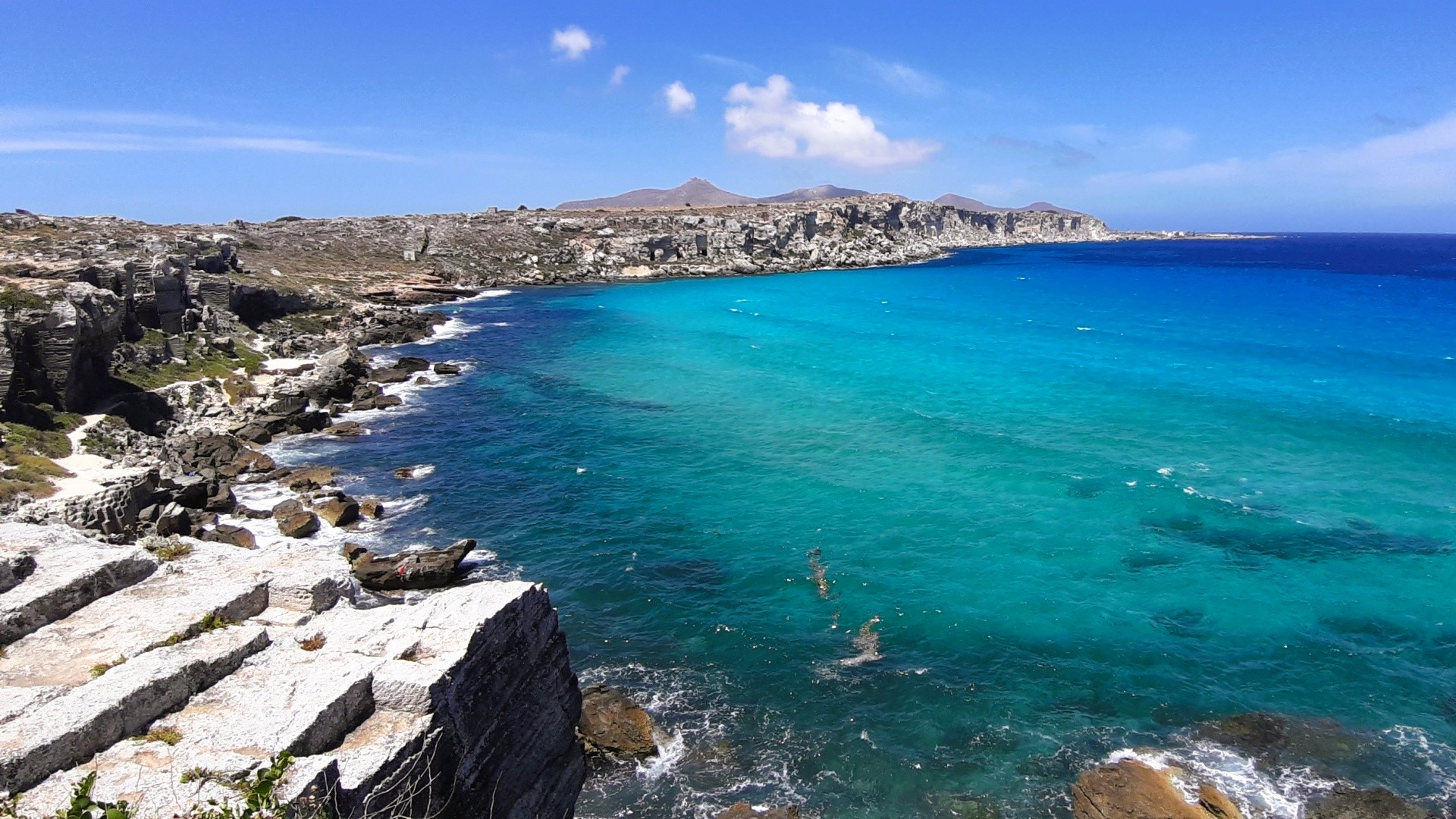
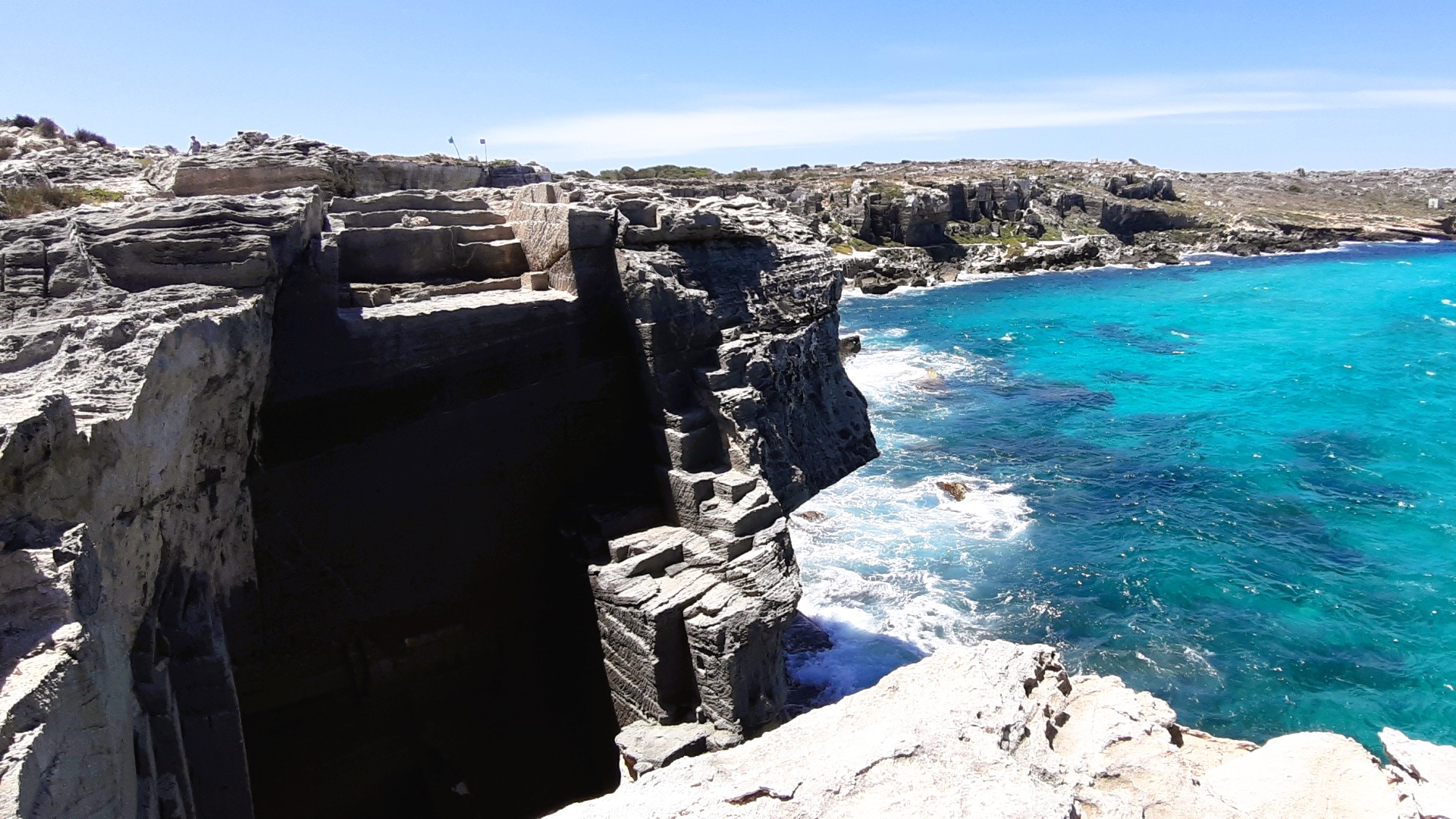
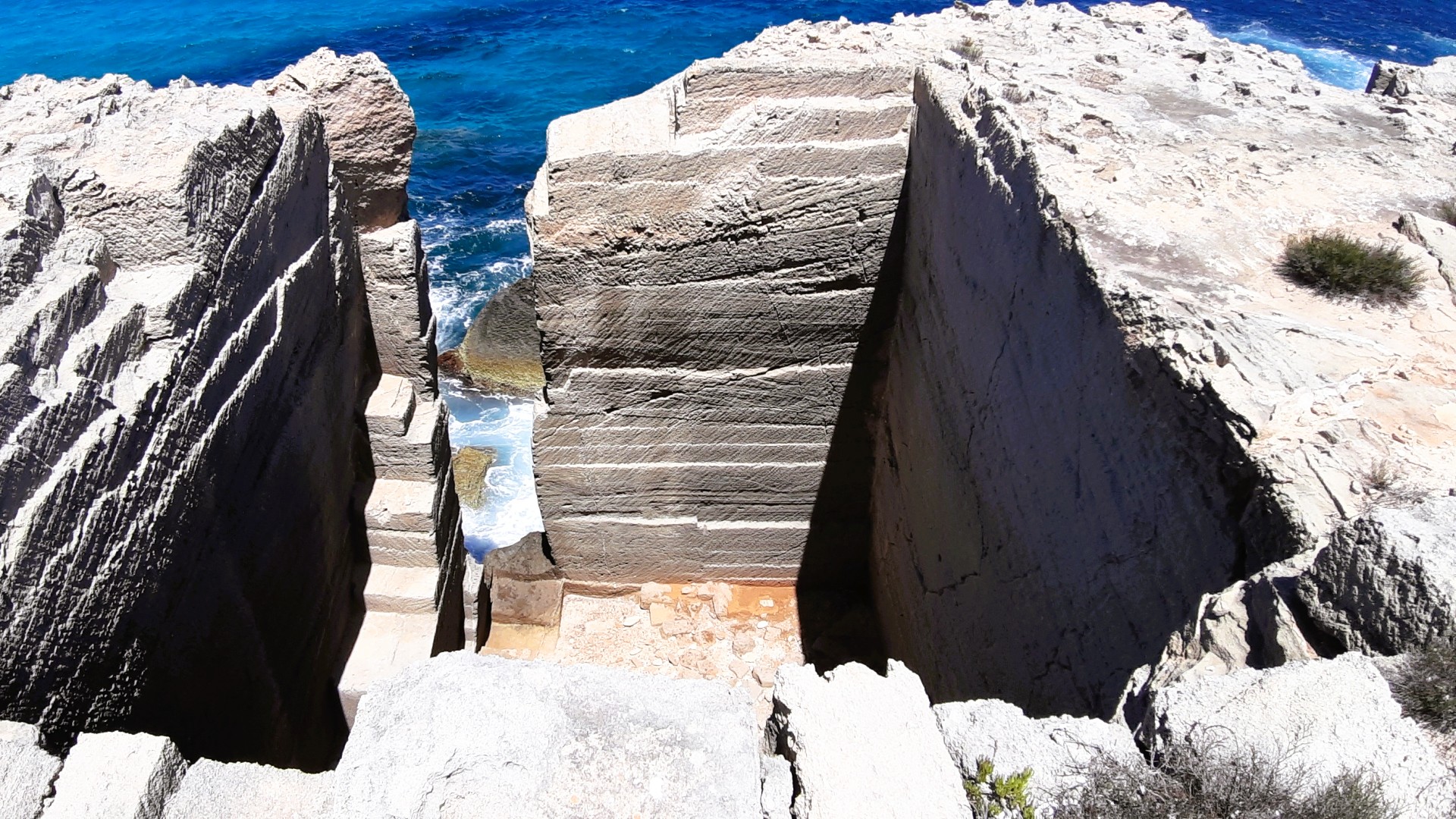
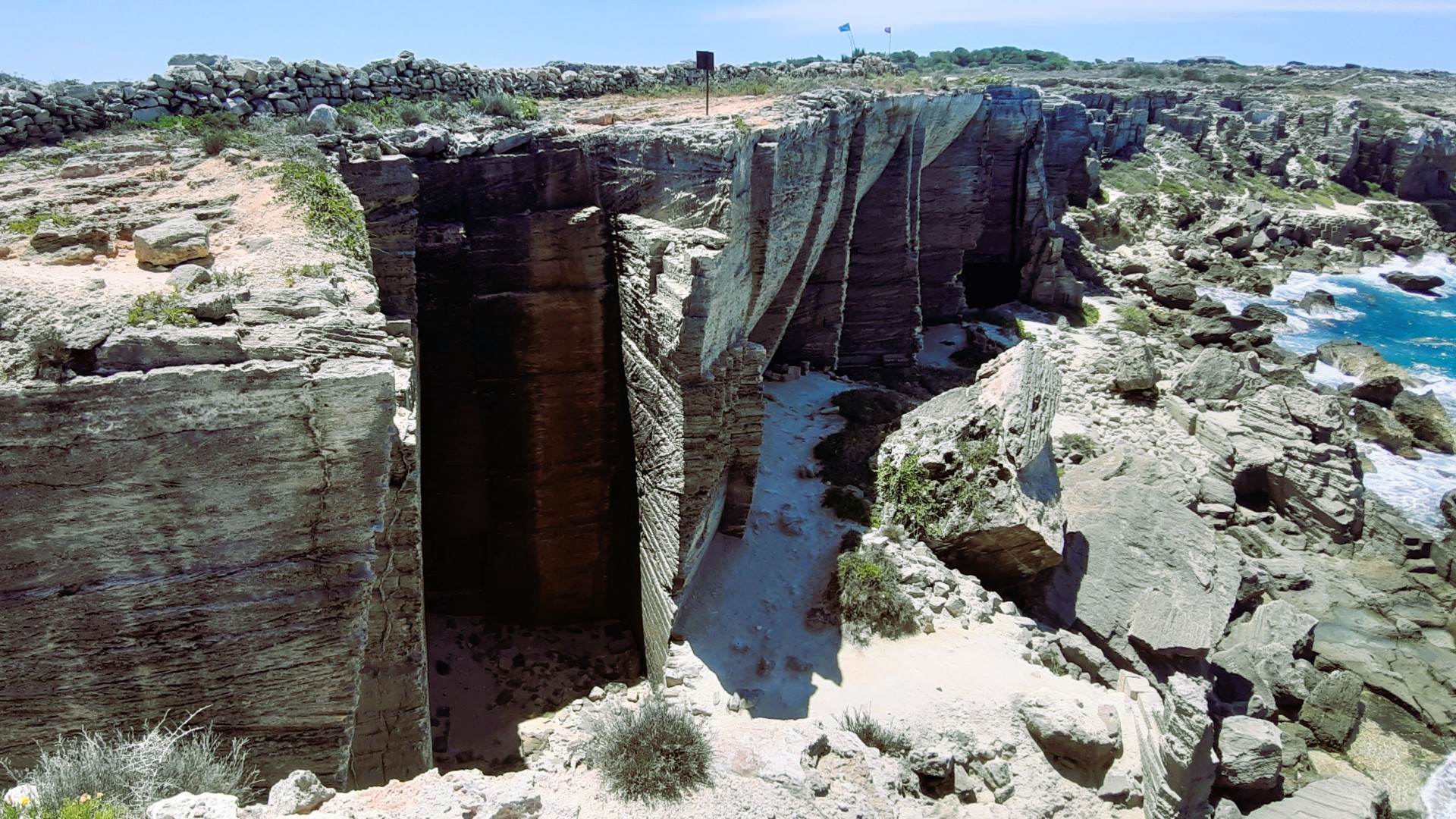
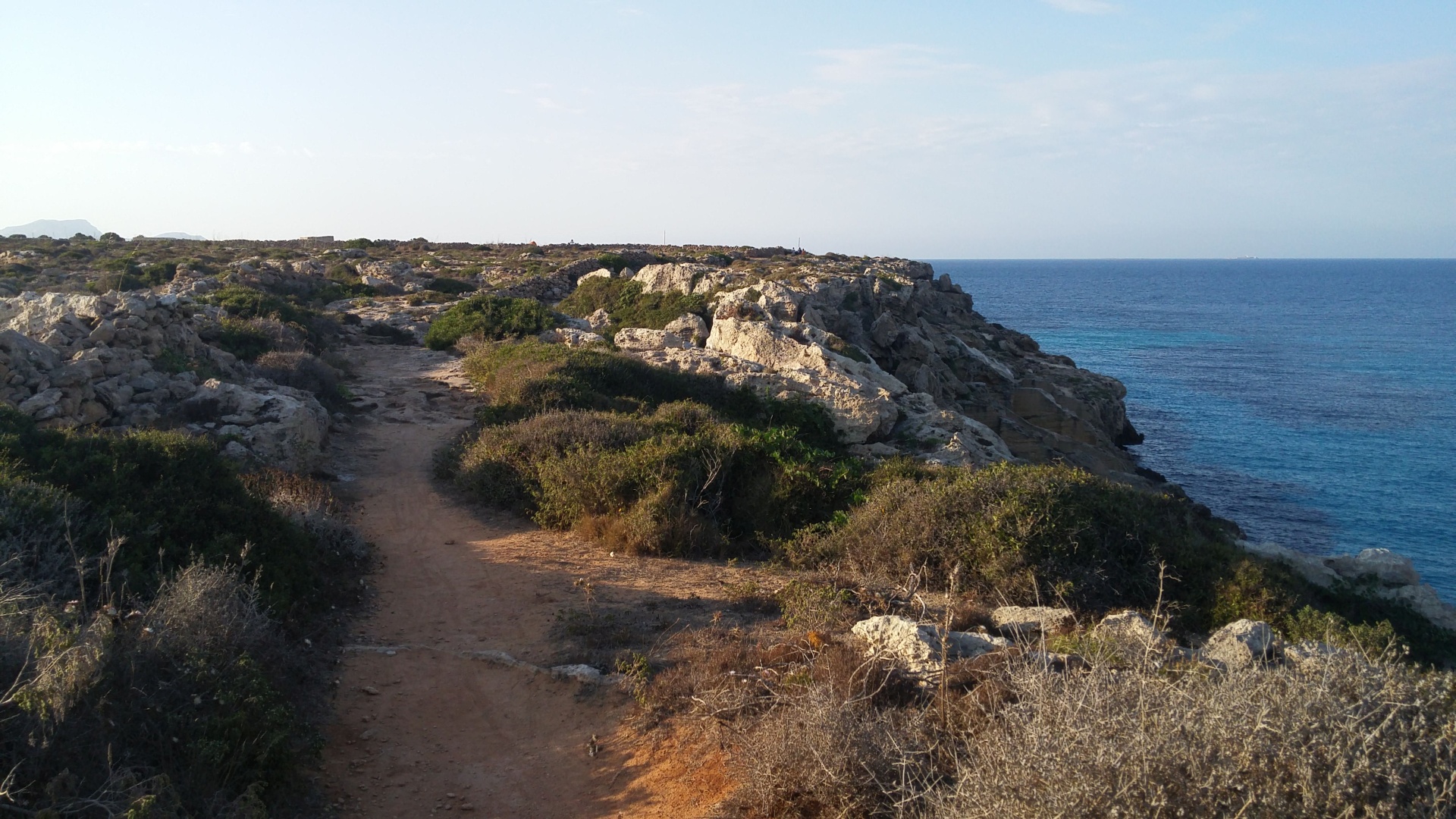
From the entrance crossroads to the cove, instead of going down, continue to the right along a fantastic natural coastal path, difficult to travel even by bike, which will introduce you to the most evocative coastal stretch of the day. Cliffs overlooking the sea where the traces of the quarries are clear, Mediterranean vegetation which with its scents and colors will accompany your step until you reach Bue Marino. who, descending slightly onto a gully dug into the calcarenite, we reach the large cave where it is possible to observe the large rooms that were created following the excavation to empty the quarry.
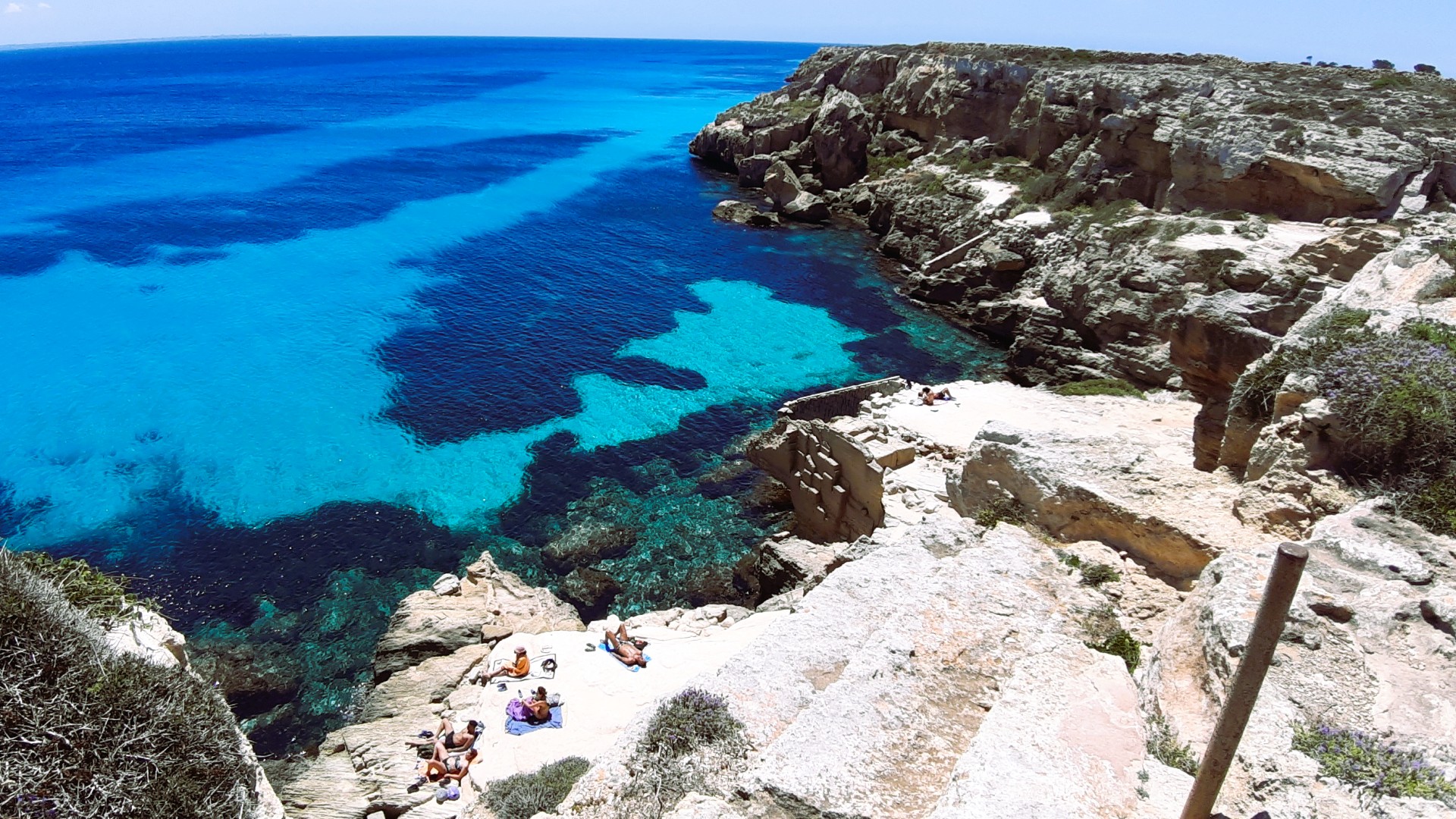
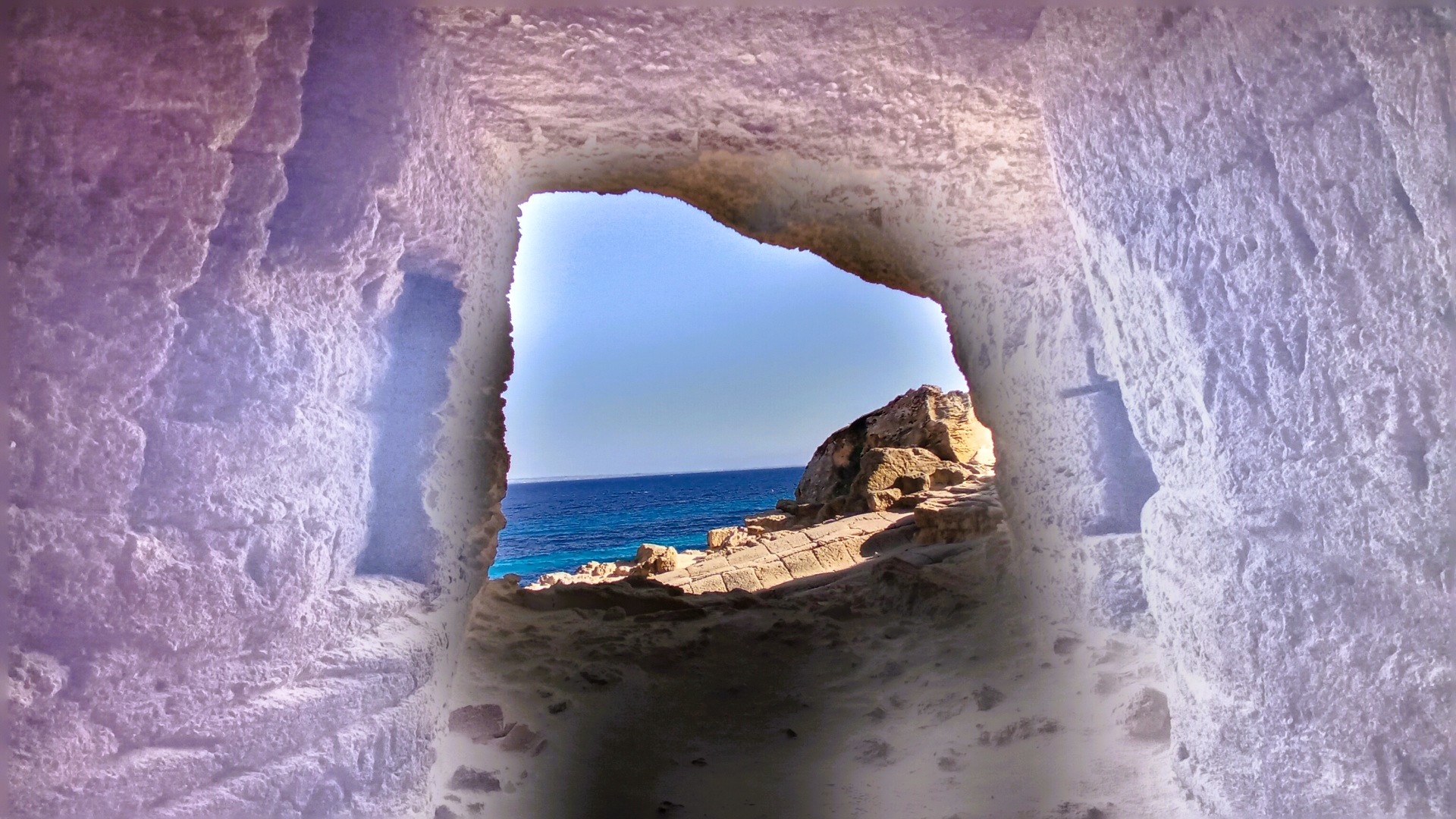
Let's rest among the waves of the sea which interrupts here in the jagged rocky coast, if a day of rough seas the spectacle of nature's power is guaranteed !
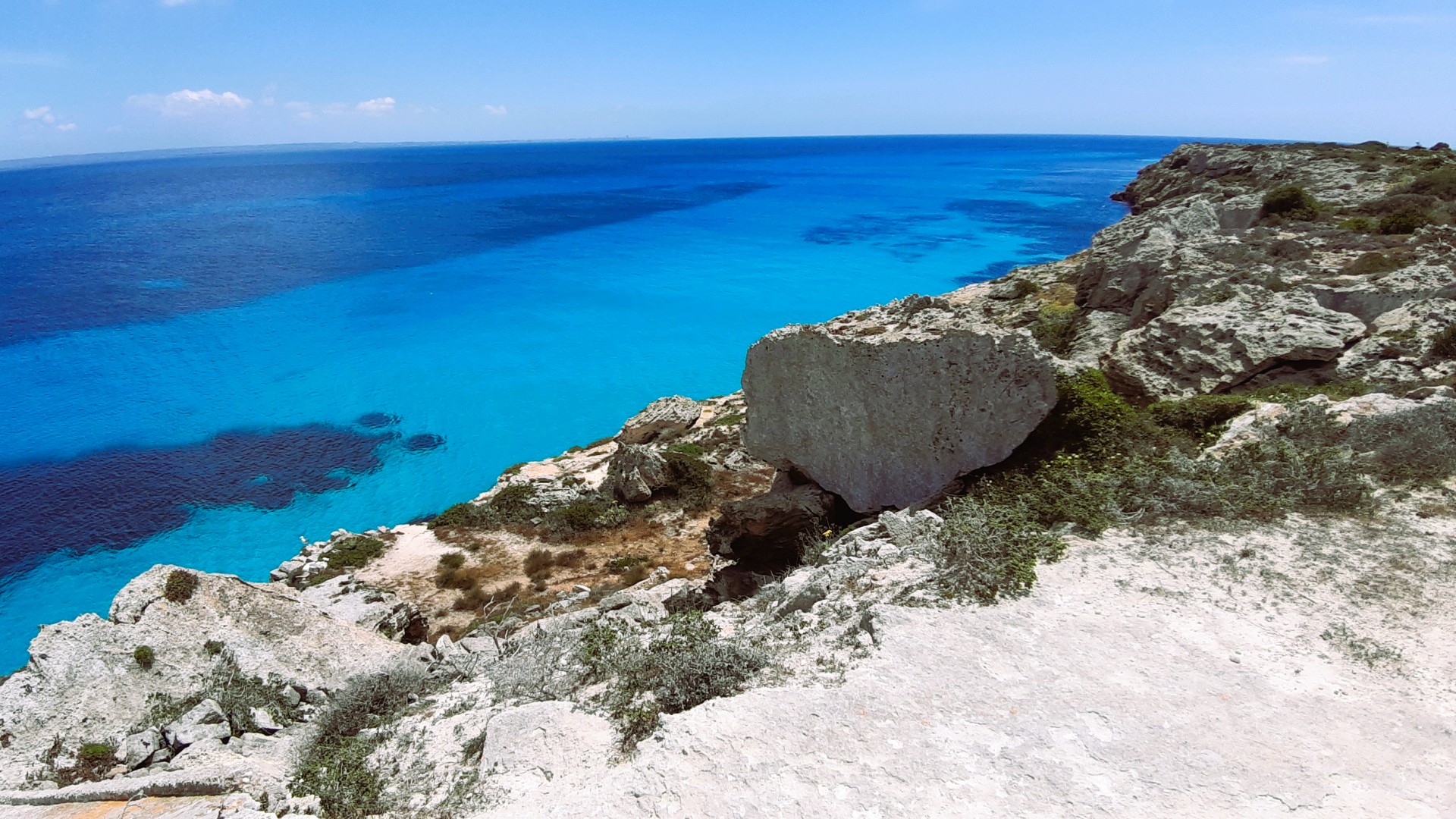
We have reached the destination of our walk to discover the quarries but a stop on the way back is almost obligatory, i.e. the Garden of the Impossible. Going up the cave we continue to the left having arrived from the right and we go onto the dirt road that takes us inside the island about here 1 km we find the entrance to the quarry that a family has transformed into a wonderful place. But call first to make sure you find someone to open the door and let you in.
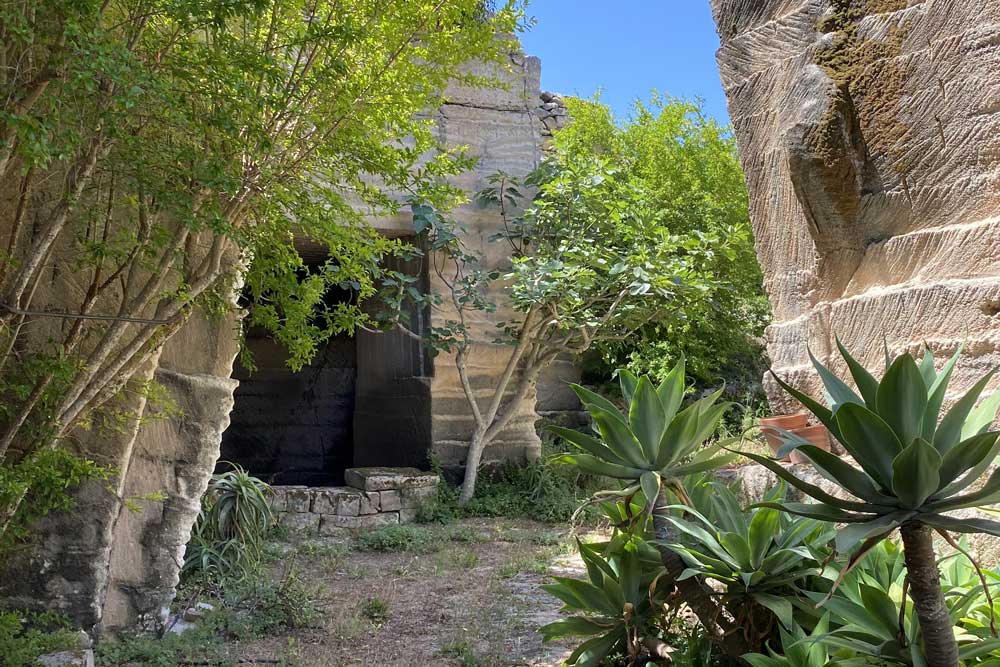
Leaving the garden we return to the town via the road where the building is located Camping Egad (BOOK HERE) and then we will arrive behind Favignana via Via Roma, going through others 3 and a half km approximately.
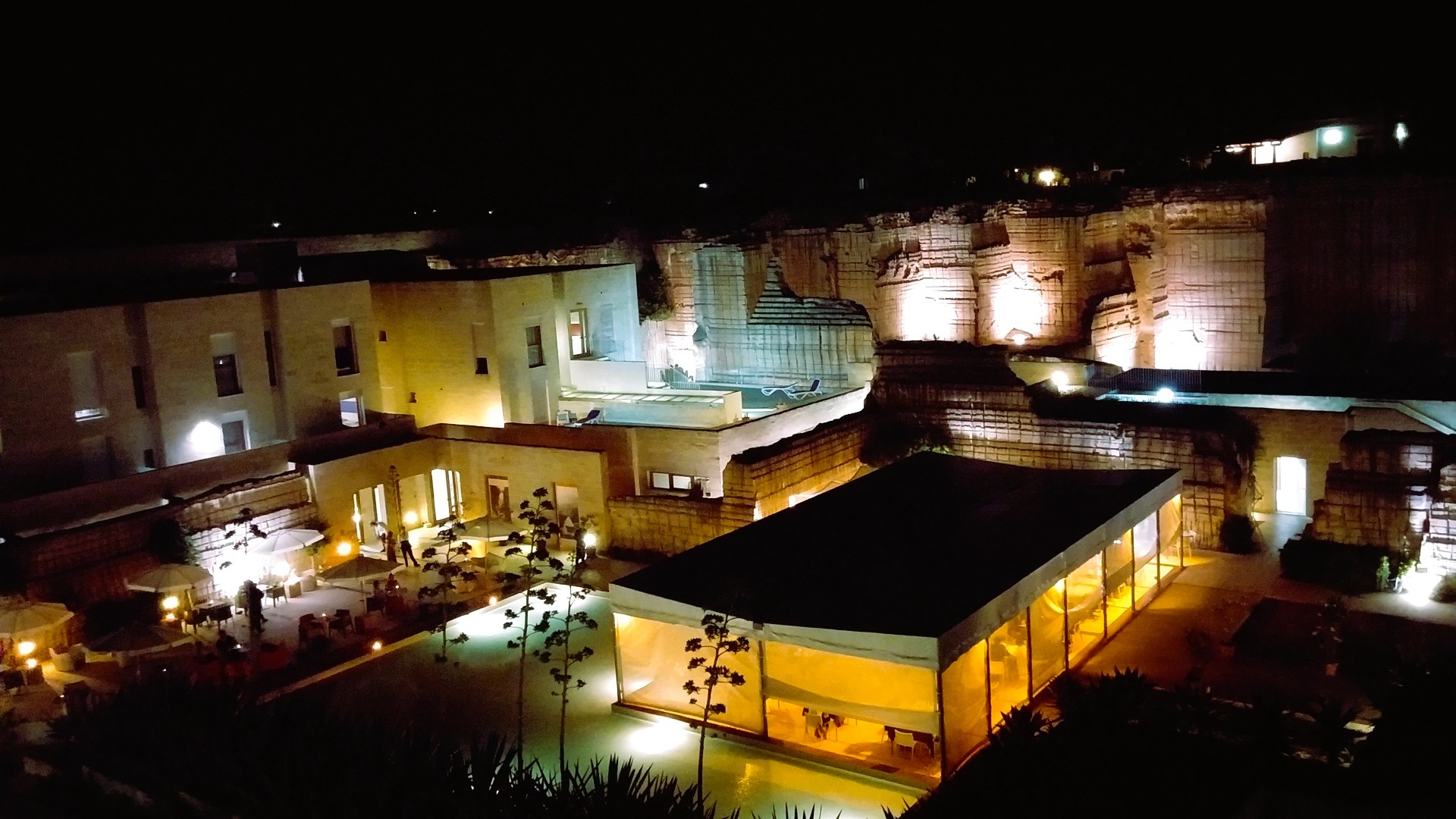
Nearby, as a curiosity, is one of the most evocative hotels in Sicily: l’Hotel Cave Bianche (BOOK HERE), which is also a restaurant, set in a calcarenite quarry with garden and swimming pool where you can dine in a fairytale atmosphere.
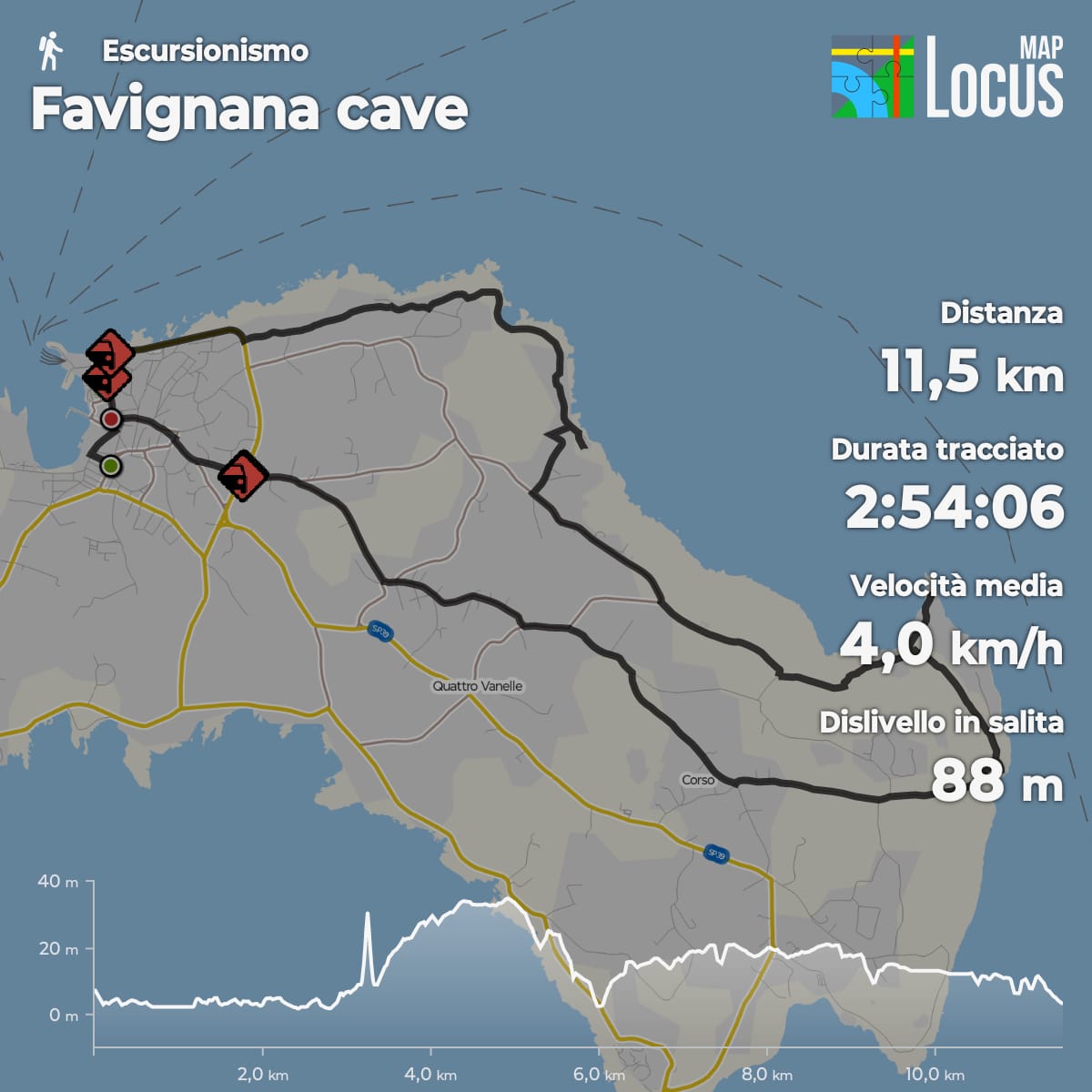
In total we will almost have done 12 km but certainly satisfied with a day that we will never forget for the rest of our lives ! The itinerary can also be done by bike but it certainly does not give the same sensations as a continuous discovery such as a nature walk.
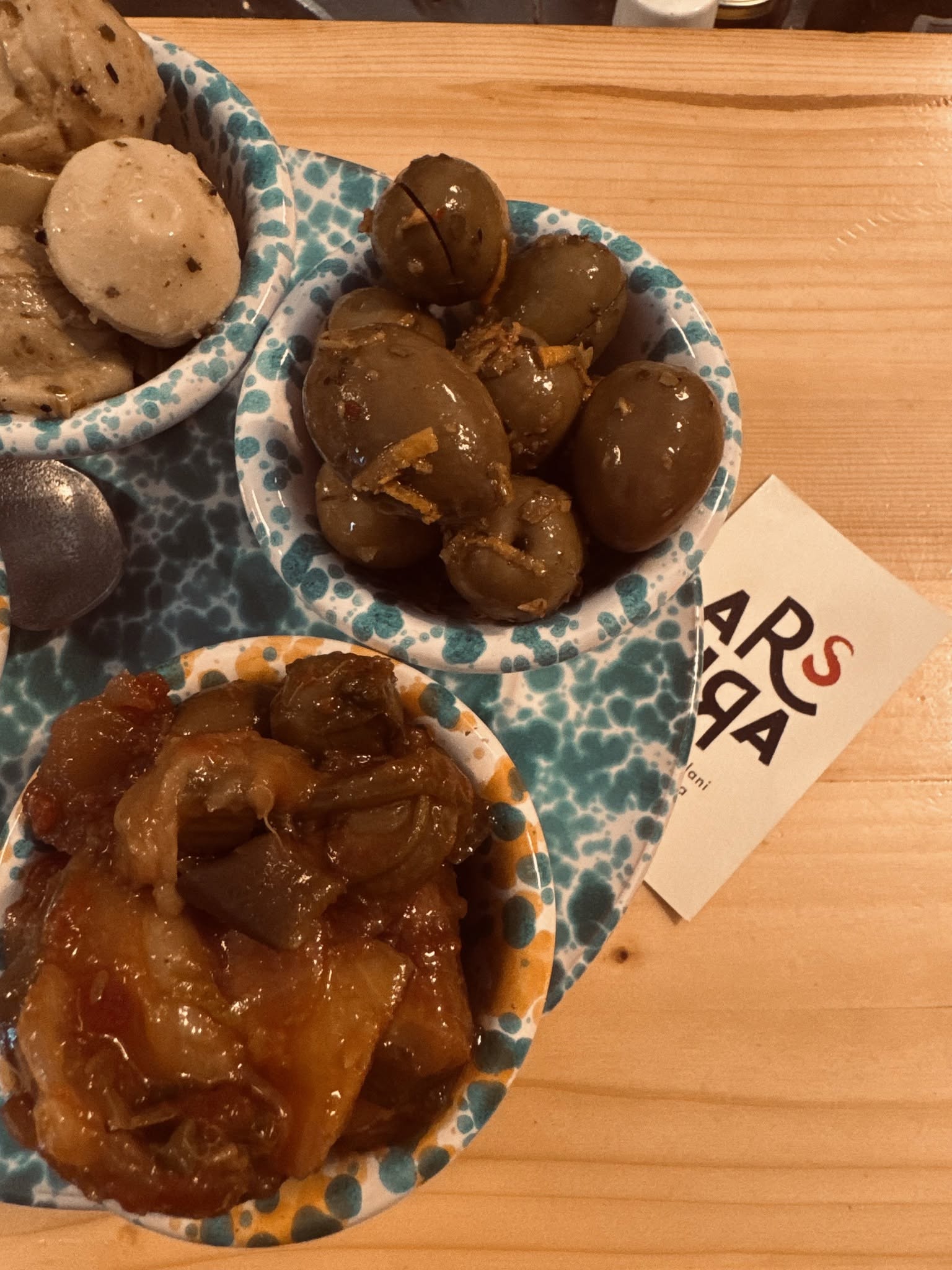
At the end of the tour it will already be late afternoon… a stop at the pub “Arsusa, island spirits” will help you recover from the mineral salts lost throughout the day… trust Elia and Peppe's advice.
Photos and text © Giorgio De Simone
Here is the complete itinerary on the map: